

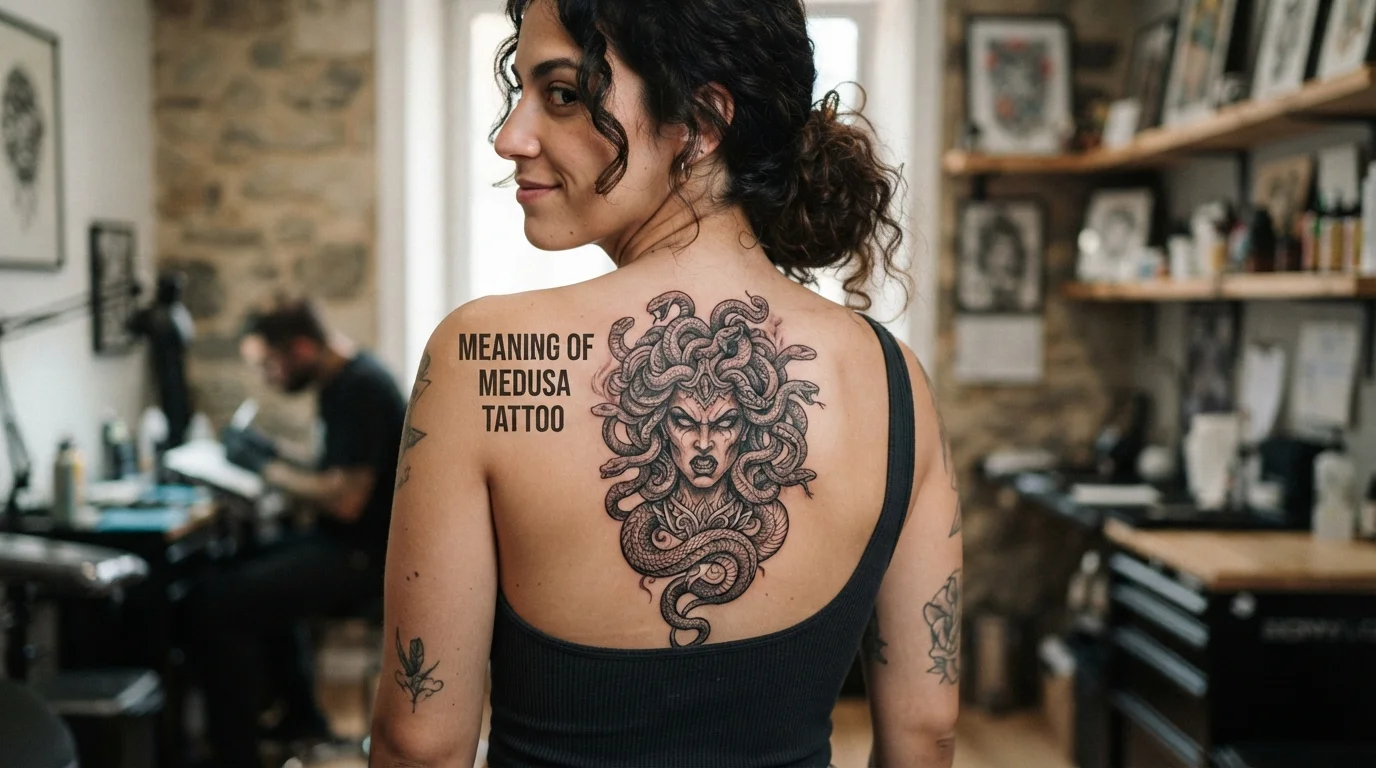
Meaning of Medusa Tattoo – Complete SEO Guide
The Medusa tattoo is one of the most symbolic tattoo designs inspired by Greek mythology. Originally, Medusa was a beautiful woman who, according to myth, was transformed into a Gorgon with snakes for hair. Today, the meaning of a Medusa tattoo has evolved beyond mythology and can represent strength, resilience, feminine power, protection, survival, transformation, and overcoming hardship.
Because symbolism is personal, a Medusa tattoo can have different meanings depending on the wearer. Some choose it for its connection to Greek mythology, while others see it as a symbol of empowerment or protection.
Meaning of Medusa Tattoo for Girl
The meaning of a Medusa tattoo for a girl often centers on strength, independence, confidence, and resilience. Many women choose Medusa because she has become a modern symbol of standing strong after difficult experiences and refusing to be defined by them.
Common meanings include:
Female empowerment
Courage during difficult times
Self-confidence
Protection from negativity
Personal transformation
Independence
For some girls, the tattoo is simply an appreciation of Greek mythology or artistic design rather than a deeper personal statement.
Popular Placements
Forearm
Shoulder
Back
Thigh
Rib cage
Ankle
Meaning of Medusa Tattoo on a Woman
The meaning of a Medusa tattoo on a woman varies from person to person. While there is no single universal interpretation, many women choose the design to symbolize:
Personal resilience
Emotional healing
Protection
Wisdom
Confidence
Reclaiming personal power
Independence
In recent years, some people have also associated the Medusa tattoo with survival after traumatic experiences. However, this interpretation is modern and personal rather than an official or universal meaning. Not everyone with a Medusa tattoo shares this symbolism.
Others simply admire Medusa as a powerful figure from Greek mythology or appreciate the artistic style of the design.
Spiritual Meaning of Medusa Tattoo
The spiritual meaning of a Medusa tattoo often relates to transformation, protection, intuition, and personal growth.
Many people believe Medusa represents the ability to overcome fear and emerge stronger after life’s challenges.
Common spiritual interpretations include:
Spiritual protection
Personal transformation
Releasing the past
Emotional healing
Inner wisdom
Feminine divine energy
Self-discovery
Although these meanings are popular in modern spirituality, they are symbolic interpretations rather than traditional religious beliefs.
Medusa Tattoo Meaning for Male
A Medusa tattoo for men can symbolize several positive qualities. While Medusa is a female figure in Greek mythology, many men choose the tattoo because it represents:
Strength
Fearlessness
Protection
Power
Transformation
Wisdom
Respect for mythology
Some men also view Medusa as a reminder to confront challenges with courage and resilience.
Others simply appreciate the striking visual appearance of the snake-haired figure without attaching a deeper symbolic meaning.
Medusa Tattoo Ideas
If you’re looking for Medusa tattoo ideas, there are many styles to suit different preferences.
Popular Medusa Tattoo Designs
Realistic Medusa portrait
Black and grey Medusa
Minimalist Medusa outline
Traditional Greek-inspired Medusa
Geometric Medusa tattoo
Medusa with roses
Medusa surrounded by snakes
Medusa with a crown
Half-face Medusa design
Neo-traditional Medusa artwork
Popular Tattoo Placements
Arm
Sleeve
Forearm
Shoulder
Chest
Back
Thigh
Calf
Hand
Many people customize their Medusa tattoo by adding flowers, Greek patterns, moons, stars, or symbolic elements that reflect their personal story.
Medusa Tattoo SA Meaning
Many people search for “Medusa tattoo SA meaning” because they have seen discussions on social media. In this context, SA commonly stands for sexual assault.
In recent years, some individuals have adopted the Medusa tattoo as a personal symbol of survival, resilience, and reclaiming strength after traumatic experiences. This interpretation became more widely discussed through online communities and social media.
However, it is important to understand that:
This is not the original meaning of the Medusa myth.
Not everyone with a Medusa tattoo has this personal association.
Many people choose the design purely because they admire Greek mythology, its artistic style, or its symbolism of strength and protection.
The meaning of a Medusa tattoo ultimately depends on the individual who wears it.
Simple Medusa Tattoo
A simple Medusa tattoo features clean lines and minimal detail while still capturing the recognizable features of Medusa, especially her flowing snakes and expressive face.
Popular Simple Designs
Fine-line Medusa face
Small snake-hair silhouette
Single-line Medusa portrait
Minimalist black ink design
Tiny shoulder tattoo
Wrist Medusa outline
Neck tattoo
Behind-the-ear Medusa
Simple designs are ideal for people who want a meaningful tattoo with an elegant and modern appearance.
Medusa Tattoo for Female
A Medusa tattoo for females is often chosen as a symbol of confidence, resilience, beauty, and independence. It has become one of the most popular mythology-inspired tattoo designs for women because it combines artistic beauty with meaningful symbolism.
Common reasons women choose a Medusa tattoo include:
Celebrating inner strength
Representing transformation
Honoring personal growth
Expressing individuality
Appreciating Greek mythology
Symbolizing protection
Whether large or small, realistic or minimalist, a Medusa tattoo can carry deeply personal significance. Its meaning is ultimately defined by the wearer rather than by a single universal interpretation.
Who Is Medusa? (Mythology Behind the Tattoo Meaning)
To understand the Medusa tattoo meaning, we first need to understand the original myth.
Medusa is one of the most famous figures in Greek mythology.
Original myth summary:
- Medusa was once a beautiful woman (in some versions of the myth)
- She was transformed into a Gorgon as punishment by the goddess Athena
- Her hair became living snakes
- Anyone who looked directly at her would turn to stone
- She was eventually killed by the hero Perseus
Why Medusa matters in symbolism
Medusa represents:
- Fear
- Danger
- Power
- Transformation
- Tragic injustice
But modern interpretations go far beyond the original myth.
Core Meaning of Medusa Tattoo in 2026
The Medusa tattoo meaning depends heavily on the wearer’s personal story. However, there are several widely recognized interpretations:
1. Protection Symbol (Warding Off Harm)
One of the oldest interpretations of Medusa is as a protective symbol.
In ancient times, her image was used to:
- Ward off evil spirits
- Protect homes and temples
- Symbolize danger to enemies
Tattoo meaning today:
A Medusa tattoo can represent:
- “Do not harm me”
- Emotional or spiritual protection
- Boundaries against toxic people
It acts like a visual warning: cross me at your own risk.
2. Feminine Rage & Reclaimed Power
In modern culture, Medusa has become a powerful symbol of feminine strength and anger reclaimed after injustice.
This interpretation is especially popular in 2026 tattoo culture.
Meaning includes:
- Standing up after trauma
- Turning pain into strength
- Reclaiming control over your story
- Refusing to be a victim
Instead of being a monster, Medusa becomes a symbol of survival and empowerment.
3. Trauma, Survival & Transformation
Many people choose a Medusa tattoo to represent personal transformation after hardship.
It can symbolize:
- Abuse recovery
- Emotional healing
- Rebuilding identity
- Becoming stronger after betrayal
In this sense, Medusa represents:
“I survived what was meant to destroy me.”
4. Beauty and Danger Combined
Another interpretation focuses on duality:
- Beauty vs danger
- Attraction vs fear
- Softness vs strength
Medusa symbolizes the idea that:
Something can be beautiful and powerful at the same time.
This makes it a popular tattoo for people who identify with complex emotional identities.
5. Justice and Misunderstood Identity
Modern retellings often view Medusa as misunderstood rather than evil.
Some interpretations suggest:
- She was punished unfairly
- She became a symbol of injustice
- Her “monstrous” image was imposed on her
So the tattoo can mean:
- “I am not what others say I am”
- Reclaiming identity after judgment
Why Medusa Tattoos Became So Popular
The rise of the Medusa tattoo in 2026 is not random. It reflects cultural and social shifts.
1. Social Media Influence
Platforms like TikTok and Instagram have popularized:
- Mythology tattoos
- Feminist symbolism
- Dark aesthetic art
Medusa fits all three perfectly.
2. Mental Health Awareness
More people now use tattoos to represent:
- Healing journeys
- Trauma recovery
- Emotional strength
Medusa naturally aligns with these themes.
3. Feminist Reinterpretation of Mythology
Modern storytelling has redefined Medusa from “monster” to “symbol of injustice and empowerment.”
This reinterpretation has made the tattoo:
- More meaningful
- More personal
- More widely accepted
4. Aesthetic Appeal
Beyond meaning, Medusa tattoos are visually striking:
- Snake hair designs
- Detailed face shading
- Mythological realism
- Dark, artistic styles
They are both symbolic and visually powerful.
Different Styles of Medusa Tattoos and Their Meaning
The meaning can also shift based on design style.
1. Realistic Medusa Tattoo
Meaning:
- Strength
- Raw emotion
- Personal transformation
Often highly detailed and dramatic.
2. Minimalist Medusa Tattoo
Meaning:
- Quiet strength
- Subtle empowerment
- Private healing journey
Simple but meaningful.
3. Dark / Horror Style Medusa
Meaning:
- Fearlessness
- Inner rage
- Protection from harm
Emphasizes her terrifying mythological side.
4. Feminist Symbolism Style
Meaning:
- Reclaimed identity
- Empowerment after trauma
- Resistance to injustice
Often paired with broken chains or symbolic elements.
5. Abstract Medusa Tattoo
Meaning:
- Emotional complexity
- Identity exploration
- Personal interpretation
Open-ended symbolism.
Real-Life Interpretations of Medusa Tattoos
Here’s how people often explain their Medusa tattoos in real-world contexts:
Example 1: Personal Strength
“My Medusa tattoo reminds me I survived everything that tried to break me.”
Meaning: resilience and healing
Example 2: Boundaries
“She’s my warning sign. Don’t bring negativity into my life.”
Meaning: emotional protection
Example 3: Transformation
“I wasn’t always strong, but I became this version of myself.”
Meaning: growth and change
Example 4: Reclaimed Identity
“I stopped letting others define me.”
Meaning: self-empowerment
Common Misunderstandings About Medusa Tattoos
Many people misunderstand the meaning of Medusa tattoo, especially if they only know the myth superficially.
1. Thinking It Only Means “Evil”
Wrong:
- Medusa = monster tattoo
Correct:
- Modern meaning includes empowerment, survival, and protection
2. Assuming It Has One Fixed Meaning
Wrong:
- All Medusa tattoos mean the same thing
Correct:
- Meaning is highly personal and symbolic
3. Confusing Myth with Modern Interpretation
The original myth is not the same as modern symbolism. Today’s meaning has evolved significantly.
4. Ignoring Emotional Context
A Medusa tattoo often reflects:
- Personal trauma
- Healing journey
- Identity transformation
Not just mythology.
Related Mythology Tattoo Symbols
If you’re researching Medusa tattoo meaning, you may also be interested in:
1. Athena Tattoos
Symbol of wisdom and justice.
2. Perseus Tattoos
Represents heroism in Greek mythology.
3. Snake Tattoos
Symbol of transformation, rebirth, and danger.
4. Gorgon Symbols
Represents fear, protection, and mythological power.
5. Greek Mythology Tattoos
Broader category of symbolic storytelling designs.
Why Medusa Tattoos Feel So Powerful
The Medusa tattoo resonates deeply because it represents contradiction:
- Beauty and terror
- Victim and monster
- Pain and strength
- Silence and voice
This emotional duality is why it remains one of the most meaningful tattoo choices in 2026.