
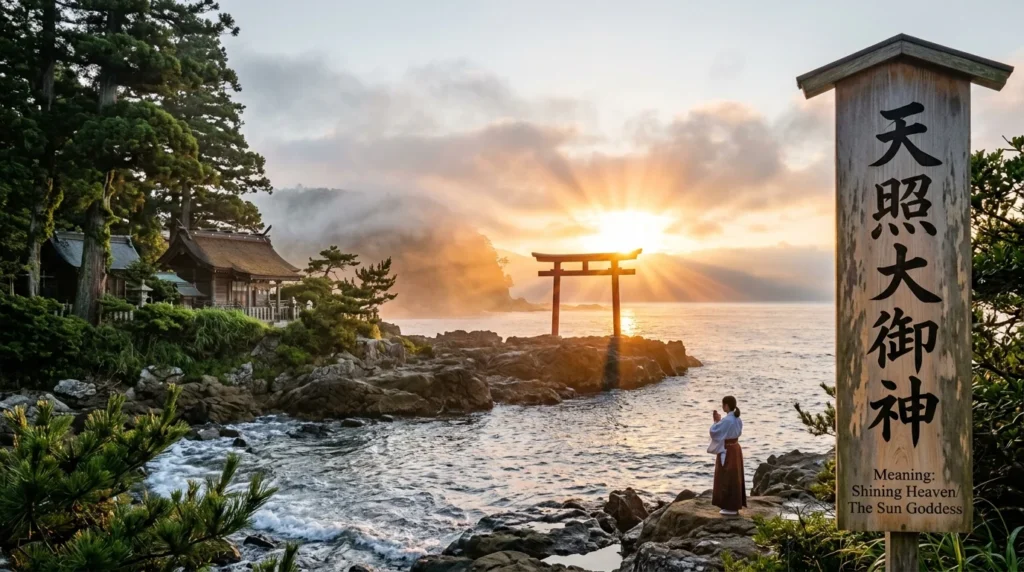
What Does “Amaterasu Meaning” Mean in Simple Words?
The Amaterasu meaning can be simplified as:
Amaterasu = the Japanese sun goddess who brings light, life, and order to the world
She is one of the most important deities in Shinto belief and is traditionally seen as:
- the goddess of the sun
- the source of light and life
- a symbol of purity and harmony
Simple explanation:
Amaterasu is the divine being who represents the sun and illumination in Japanese mythology.
Who Is Amaterasu in Japanese Mythology?
In Shinto mythology, Amaterasu is a major deity known as:
Amaterasu
She is believed to be:
- the ruler of the heavens
- the goddess of the sun
- an ancestor of the Japanese imperial family (mythologically)
Key role in mythology:
Amaterasu is considered the bringer of light who controls the sun and ensures balance in the world.
Without her, mythology says the world would fall into darkness.
Origin of the Name “Amaterasu”
The word “Amaterasu” comes from ancient Japanese language:
- “Ama” = heaven or sky
- “Terasu” = to shine or illuminate
Combined meaning:
Amaterasu = “She who shines in the heavens”
This directly connects to her identity as the sun goddess.
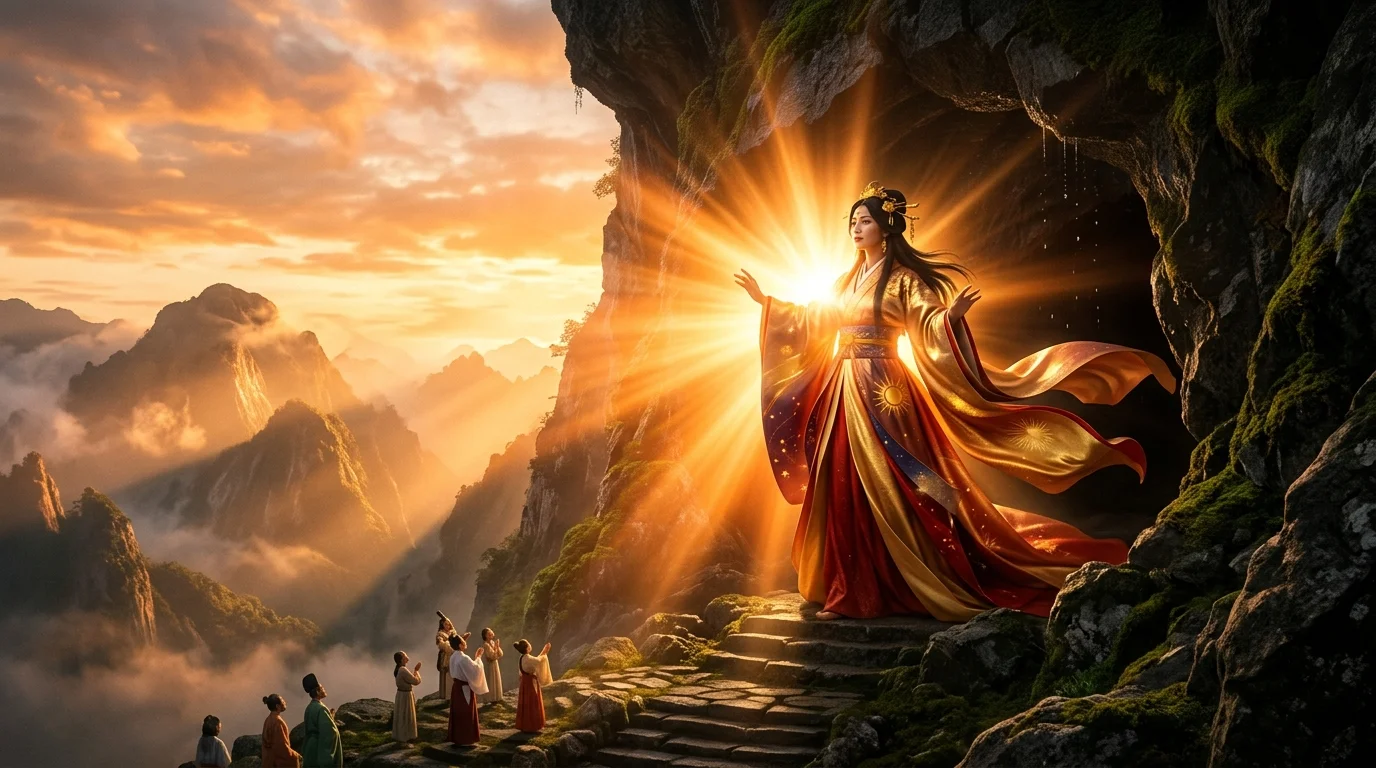
The Famous Myth: Amaterasu and the Cave Story
One of the most famous stories in Japanese mythology explains why Amaterasu is so important.
The story (simplified):
Amaterasu becomes upset after a conflict with her brother Susanoo and hides inside a cave.
Result:
- The world is plunged into darkness
- Crops stop growing
- Chaos spreads
To bring her out, other gods:
- perform rituals
- create celebrations
- use a mirror to attract her curiosity
Eventually, Amaterasu comes out, and light returns to the world.
Symbolic meaning:
- light overcoming darkness
- harmony restoring order
- balance returning to nature
This myth is central to understanding the Amaterasu meaning.
Amaterasu Meaning in Shinto Religion
In Shinto, Amaterasu is one of the most important deities.
She is worshipped as:
- the sun goddess
- a source of life energy
- a divine protector
Important shrine:
The most sacred shrine dedicated to her is:
- Ise Grand Shrine in Japan
Millions of people visit it for:
- blessings
- spiritual connection
- cultural heritage
Symbolism of Amaterasu Meaning
The Amaterasu meaning goes beyond mythology. It represents deep symbolic ideas:
1. Light and Life
She represents:
- sunlight
- growth
- energy
- survival
Without the sun, life cannot exist.
2. Hope and Renewal
Amaterasu symbolizes:
- new beginnings
- recovery after darkness
- emotional healing
3. Order and Balance
Her mythology represents:
- harmony in nature
- balance between chaos and peace
4. Divinity and Leadership
She is also linked to:
- divine authority
- royal lineage (in myth)
- spiritual leadership
Amaterasu Meaning in Japanese Culture
In Japanese culture, Amaterasu is more than a mythological figure.
She influences:
- national identity
- traditional rituals
- cultural storytelling
- festivals and ceremonies
Her image is often used in:
- art
- literature
- historical symbolism
Amaterasu Meaning in Modern Pop Culture
Today, the name Amaterasu appears widely in:
- anime
- video games
- manga
- fantasy stories
Example usage:
- powerful characters inspired by sun energy
- divine fire or light abilities
- myth-based storytelling
In modern media, Amaterasu often represents:
- ultimate power
- divine light
- unstoppable energy
Amaterasu Meaning in Video Games & Anime
The name Amaterasu is frequently used in fictional worlds.
Characters or abilities named after her often have:
- fire powers
- light-based attacks
- divine transformation abilities
This is inspired by her role as a sun goddess.
Real-Life Examples of Amaterasu Meaning
Example 1: Mythology
“Amaterasu hid in a cave and the world became dark.”
Meaning:
The sun goddess withdrew her light.
Example 2: Religion
“Shrines dedicated to Amaterasu are sacred in Japan.”
Meaning:
She is worshipped as a divine deity.
Example 3: Pop Culture
“A character used Amaterasu powers to create fire.”
Meaning:
Inspired by sun and light mythology.
Example 4: Symbolism
“Amaterasu represents hope after darkness.”
Meaning:
Light returning after hardship.
Common Misunderstandings About Amaterasu Meaning
Mistake 1: Thinking Amaterasu is just a fictional character
She is a mythological deity in Shinto tradition, not just fiction.
Mistake 2: Confusing her with general sun symbols
Amaterasu is a specific goddess, not just a symbol of the sun.
Mistake 3: Assuming she only appears in anime
She originates from ancient mythology long before modern media.
Mistake 4: Ignoring cultural importance
Amaterasu is deeply tied to Japanese spiritual heritage.
Related Terms to Amaterasu Meaning
Shinto
Traditional religion of Japan.
Sun Goddess
A divine figure representing the sun.
Mythology
Traditional stories explaining gods and nature.
Divine Light
Symbolic representation of purity and energy.
Imperial Lineage (Mythological)
Amaterasu is linked in legend to Japan’s royal ancestry.
Why Amaterasu Is Still Important Today
The Amaterasu meaning remains relevant because:
- it is part of cultural identity
- it influences modern storytelling
- it appears in global media
- it represents universal ideas like light and hope
Even in 2026, Amaterasu remains a powerful cultural and symbolic figure.