

What Does “Estrangement” Mean?
Estrangement refers to a state of emotional distance, separation, or loss of connection between people who previously had a close relationship.
Simple Definition
Estrangement is the breakdown of a relationship in which individuals become emotionally or physically disconnected, often with little or no communication.
Estrangement can occur between:
- Parents and children
- Siblings
- Spouses
- Extended family members
- Close friends
- Romantic partners
Quick Answer
When people are estranged, they typically:
- Have limited or no contact
- Feel emotionally disconnected
- Experience unresolved conflict or distance
- No longer maintain a close relationship
The Origin of the Word Estrangement
The word estrangement comes from older French and Latin roots related to becoming “strange” or “distant” from someone.
Historically, the term described the process of:
- Growing apart
- Becoming alienated
- Losing emotional closeness
Today, estrangement is commonly used in discussions about relationships, family dynamics, psychology, and social issues.
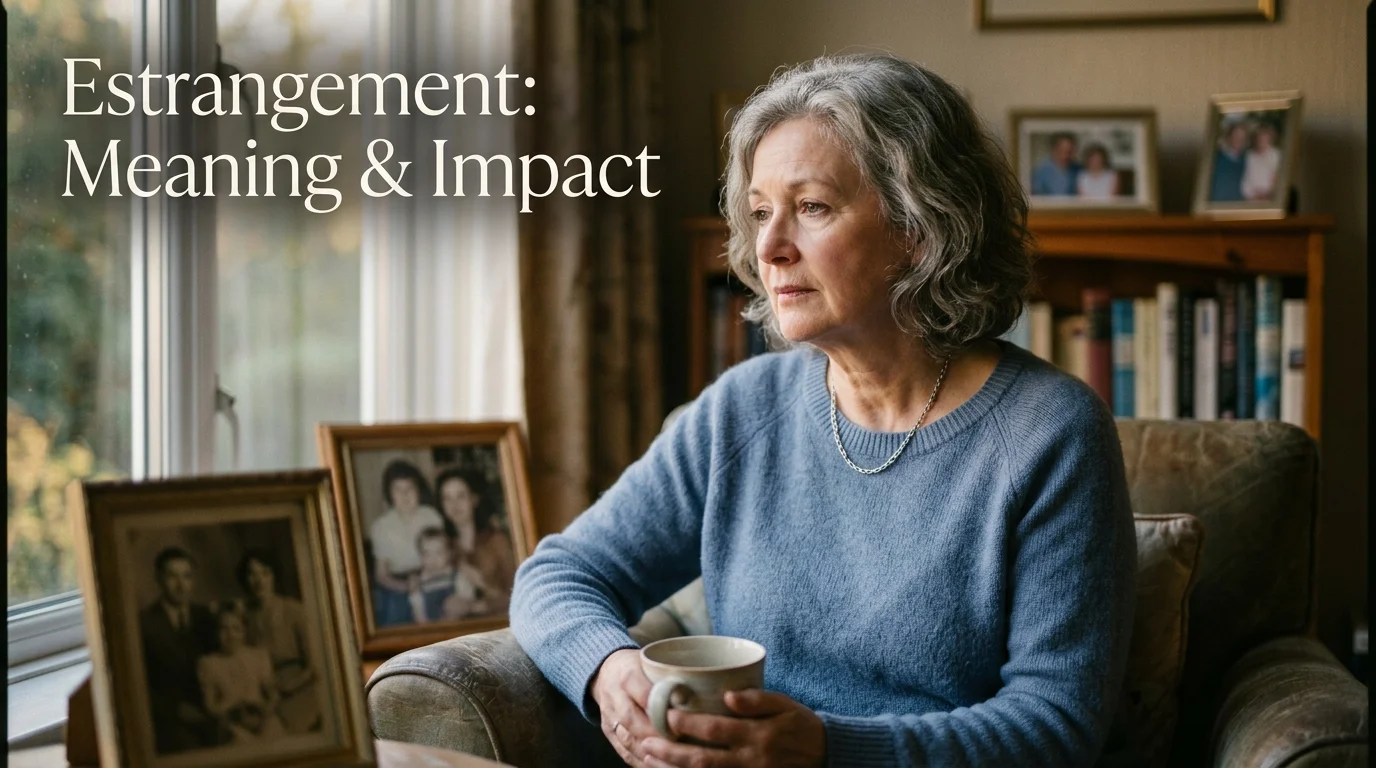
Estrangement Meaning in Relationships
Estrangement often occurs when a relationship experiences a significant breakdown.
Relationship Examples
- A parent and adult child stop speaking for years.
- Former friends gradually lose all contact.
- Siblings become disconnected after a major conflict.
- A spouse separates emotionally before a divorce.
In each case, the relationship shifts from closeness to distance.
Emotional Component
Estrangement usually involves more than physical separation.
People may:
- Feel hurt
- Feel rejected
- Experience sadness
- Lose trust
- Struggle with unresolved emotions
The emotional aspect is what distinguishes estrangement from ordinary distance.
Family Estrangement Meaning
Family estrangement is one of the most common forms of estrangement.
What Is Family Estrangement?
Family estrangement occurs when relatives intentionally or unintentionally reduce or end communication and emotional connection.
Examples include:
- Parent-child estrangement
- Sibling estrangement
- Grandparent estrangement
- Extended family estrangement
Common Causes
Family estrangement can result from:
- Long-term conflict
- Abuse
- Neglect
- Betrayal
- Differing values
- Unresolved arguments
- Boundary issues
Every situation is unique, and there is rarely a single cause.
How Estrangement Develops
Estrangement often develops gradually rather than suddenly.
Common Stages
1. Repeated Conflict
Ongoing disagreements create tension.
2. Emotional Withdrawal
Communication becomes less frequent.
3. Reduced Contact
People interact less often.
4. Complete Separation
Communication stops entirely.
In some cases, estrangement occurs quickly after a major event, while in others it develops over many years.
How “Estrangement” Is Used in Real Conversations
Family Example
Person A: “Do you still talk to your brother?”
Person B: “No, we’ve been estranged for several years.”
Meaning:
They no longer have a relationship or regular communication.
Friendship Example
Friend: “What happened between them?”
Response: “Their friendship ended in estrangement.”
Meaning:
The relationship deteriorated and the connection was lost.
News Example
A news article may state:
“The actor spoke about his estrangement from his father.”
Meaning:
The two no longer have a close relationship or communication.
Emotional Effects of Estrangement
Estrangement can affect people in many ways.
Common Emotional Reactions
Sadness
Many people mourn the loss of the relationship.
Anger
Unresolved conflicts can lead to resentment.
Relief
Some individuals feel safer or healthier after creating distance.
Loneliness
The absence of a meaningful connection may create feelings of isolation.
Grief
People sometimes experience estrangement similarly to a loss.
The emotional experience varies depending on the circumstances.
Can Estrangement Be Temporary?
Yes.
Not all estrangements last forever.
Some relationships improve through:
- Communication
- Counseling
- Mediation
- Personal growth
- Time and reflection
However, reconciliation is not always possible or desired.
In some situations, maintaining distance remains the healthiest option.
Estrangement vs Separation
These terms are related but different.
Separation
Usually refers to physical distance or living apart.
Example:
A couple lives in different homes.
Estrangement
Refers primarily to emotional disconnection and relationship breakdown.
Example:
Family members stop speaking entirely.
A separation may lead to estrangement, but they are not identical.
Estrangement vs Alienation
People sometimes use these terms interchangeably.
Estrangement
Focuses on the state of being disconnected.
Alienation
Often refers to the process or feeling that causes disconnection.
Alienation can contribute to estrangement over time.
Common Mistakes & Misunderstandings
Mistake #1: Assuming Estrangement Means Hatred
Estranged individuals do not always hate each other.
Some still care deeply but remain separated due to unresolved issues.
Mistake #2: Thinking Estrangement Is Always Permanent
Some estranged relationships eventually reconnect.
Others remain distant indefinitely.
Mistake #3: Confusing Estrangement With Simple Distance
Living far apart does not automatically mean people are estranged.
Estrangement involves emotional disconnection, not just geography.
Mistake #4: Believing Estrangement Happens Only in Families
Estrangement can occur in:
- Friendships
- Marriages
- Romantic relationships
- Professional relationships
- Communities
Estrangement in Literature and Media
The concept of estrangement frequently appears in:
- Novels
- Films
- Television shows
- Biographies
- Memoirs
Writers often use estrangement to explore themes such as:
- Identity
- Forgiveness
- Family conflict
- Personal growth
- Reconciliation
Because it is a deeply human experience, estrangement remains a powerful storytelling theme.
Related Terms and Similar Concepts
If you’re researching the estrangement meaning, you may also encounter these related terms.
Alienation
Emotional separation or isolation.
Separation
Living apart or maintaining distance.
Disconnection
Loss of emotional closeness.
Reconciliation
Restoring a damaged relationship.
Conflict
A disagreement that may contribute to estrangement.
Boundary Setting
Establishing limits within relationships.
Isolation
Reduced social or emotional connection.
These concepts frequently appear in discussions about estrangement and relationships.
Why Understanding Estrangement Matters
Estrangement affects millions of people worldwide.
Understanding the concept can help individuals:
- Better understand relationships
- Recognize emotional challenges
- Develop healthier boundaries
- Approach conflicts with empathy
- Navigate family dynamics more effectively
Whether temporary or permanent, estrangement is a significant life experience that often carries deep emotional meaning.