
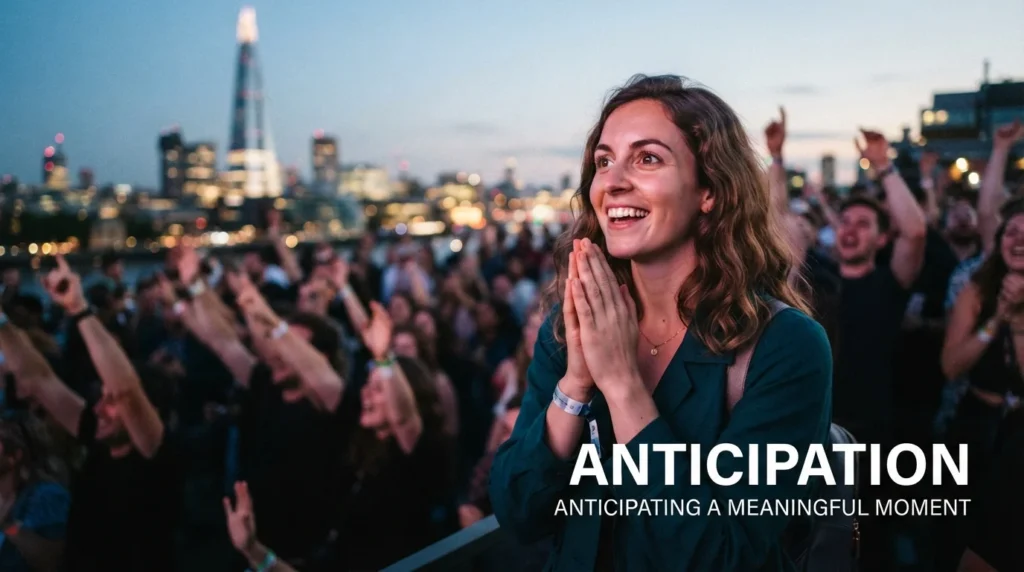

Anticipation Meaning – Definition, Urdu Meaning, Examples & Different Uses
Anticipation is a noun that means the feeling of expecting something to happen or preparing for a future event before it occurs. It can describe excitement, hope, anxiety, or readiness for something that is about to happen.
Urdu Meaning: توقع، پیشگی اندازہ، انتظار، پیش بینی، امید
Pronunciation: an-TIS-uh-PAY-shun (/ænˌtɪs.ɪˈpeɪ.ʃən/)
Anticipation Meaning in English
In English, anticipation refers to looking forward to something, expecting an event, or taking action in advance because something is expected.
Definition
Anticipation (noun): The act of expecting or predicting something before it happens, often with excitement, hope, or concern.
Examples
- The children waited in anticipation of the holiday.
- She smiled with anticipation before opening the gift.
- The company prepared in anticipation of increased demand.
Anticipation Meaning in Urdu
The Urdu meaning of anticipation includes:
- توقع
- پیش بینی
- انتظار
- امید
- پیشگی اندازہ
Urdu Examples
- وہ خوشخبری کا انتظار کر رہا تھا۔
- بچے عید کے انتظار میں بہت خوش تھے۔
- کمپنی نے بارش کی پیش بینی کے باعث پہلے سے انتظامات کر لیے۔
Anticipation Meaning in Farsi
In Farsi (Persian), anticipation can be translated as:
- انتظار (Entezār) – waiting or expectation
- پیشبینی (Pish-bini) – prediction or foresight
- توقع (Tavaqqo’) – expectation
Example
- او با انتظار خبرهای خوب زندگی میکند.
- (He lives in anticipation of good news.)
Thanking You in Anticipation Meaning
The phrase “Thanking you in anticipation” is a polite expression commonly used in formal letters and emails.
Meaning
It means:
“Thank you in advance because I expect you will help me or fulfill my request.”
Example
I look forward to your reply. Thanking you in anticipation.
Although still understood, in modern business English, people more commonly write:
- Thank you in advance.
- Thank you for your assistance.
- I appreciate your help.
Anticipation Meaning in Car (Driving)
In driving, anticipation means predicting what other road users or traffic conditions will do and preparing your actions before they happen.
Examples include:
- Slowing down when you see a traffic jam ahead.
- Expecting a pedestrian to cross the road.
- Preparing to brake when another vehicle signals a turn.
Good anticipation helps drivers avoid accidents and drive safely.
Anticipation Meaning in Law
In legal terminology, anticipation often refers to something that has already been disclosed or known before a legal claim or patent application.
In Patent Law
A patent claim may be rejected because of anticipation if an earlier invention or publication already describes the same invention.
Example
If an invention has already been publicly disclosed, it may lack novelty due to anticipation.
Anticipation Meaning in Psychology
In psychology, anticipation is the mental process of expecting future events and emotionally preparing for them.
It can produce different emotions, such as:
- Excitement
- Happiness
- Anxiety
- Fear
- Hope
Example
A student may feel anticipation before receiving exam results.
Healthy anticipation helps people plan ahead, while excessive anticipation can sometimes lead to stress or worry.
Anticipation Meaning in Biology
In biology and genetics, anticipation refers to a phenomenon where certain inherited genetic disorders appear at an earlier age or become more severe in successive generations.
Example
Some inherited neurological diseases show genetic anticipation, meaning symptoms worsen or appear earlier in children than in their parents.
Synonyms of Anticipation
Common synonyms include:
- Expectation
- Hope
- Prediction
- Forethought
- Readiness
- Excitement
- Outlook
- Prospect
- Waiting
Antonyms of Anticipation
Opposite words include:
- Surprise
- Uncertainty
- Ignorance
- Doubt
- Unpreparedness
Example Sentences
- There was great anticipation before the concert began.
- The team trained hard in anticipation of the championship.
- She packed early in anticipation of the trip.
- Everyone waited in eager anticipation for the announcement.
- His anticipation of success motivated him to work harder.
Frequently Asked Questions
What does anticipation mean?
Anticipation means expecting or preparing for something that is likely to happen in the future.
What is the Urdu meaning of anticipation?
The Urdu meaning of anticipation is توقع، پیش بینی، انتظار، امید.
What does “Thanking you in anticipation” mean?
It means “Thank you in advance”, expressing gratitude before receiving the expected help or response.
What does anticipation mean in psychology?
In psychology, anticipation is the mental and emotional expectation of future events, which may create excitement, motivation, or anxiety.
What does anticipation mean in biology?
In biology, anticipation refers to a genetic pattern in which some inherited diseases appear earlier or become more severe in each new generation.
Conclusion
Anticipation means expecting, preparing for, or looking forward to a future event. It is widely used in everyday English as well as in specialized fields like psychology, law, biology, and driving. Whether describing the excitement before a celebration, the expectation of good news, or a scientific concept, anticipation always involves thinking ahead about what is to come.
What Does “Anticipation” Mean in Simple Words?
The word anticipation means the feeling of expecting something to happen in the future, often with excitement, curiosity, or nervousness.
Simple definition:
Anticipation = the feeling of looking forward to something before it happens.
It can be:
- Exciting anticipation (positive expectation)
- Nervous anticipation (worry or tension)
- Neutral anticipation (simple expectation)
Easy explanation:
When you know something is about to happen and you are mentally waiting for it, you are in a state of anticipation.
Anticipation Meaning Explained in Detail
To fully understand anticipation meaning, we need to look at how it works in emotion, language, and real-life situations.
1. Emotional meaning
Anticipation is a strong emotional state where your mind focuses on the future event.
It often includes:
- Excitement
- Curiosity
- Anxiety
- Hope
Example:
“She waited in anticipation for her exam results.”
2. Psychological meaning
In psychology, anticipation refers to:
- Mental preparation for future events
- Emotional forecasting
- Expectation-based thinking
Your brain starts reacting even before something happens.
3. Everyday English meaning
In daily use, anticipation simply means:
- Waiting for something to happen
- Expecting an outcome
- Looking forward to an event
Example:
“There is a lot of anticipation for the new movie.”
4. Formal and media usage
In news, writing, and storytelling, anticipation is used to describe public excitement or expectation:
- “high anticipation”
- “growing anticipation”
- “anticipation builds”
How “Anticipation” Is Used in Real Life
The anticipation meaning in real life becomes clearer when you see how often it appears in different situations.
1. Events and celebrations
People feel anticipation before:
- Weddings
- Birthdays
- Festivals
- Concerts
Example:
“There was huge anticipation before the wedding ceremony.”
2. Entertainment (movies, games, shows)
Anticipation is very common in pop culture:
- Movie releases
- Game launches
- TV season finales
Example:
“Fans are in anticipation of the next season.”
3. Social media trends (2026 usage)
On TikTok, Instagram, and X:
- “Anticipation is killing me”
- “The anticipation is real”
- “Waiting in anticipation 😭”
It is often used emotionally or humorously.
4. Personal life situations
People use anticipation in everyday life:
- Waiting for a reply
- Waiting for results
- Waiting for good news
Example:
“I checked my phone in anticipation of her message.”
5. Professional or academic context
Used in formal writing:
- Market anticipation
- Project anticipation
- Customer anticipation
Example:
“There is anticipation of economic growth this year.”
Real Text Message Examples of “Anticipation”
Here are simple chat-style examples to clearly understand anticipation meaning in text and conversation.
Example 1: Waiting for news
A: “Did you hear back yet?”
B: “No, I’m in total anticipation.”
Meaning: The person is waiting nervously or excitedly.
Example 2: Event excitement
A: “Are you going to the concert?”
B: “Yes, the anticipation is crazy!”
Meaning: Strong excitement before the event.
Example 3: Movie release
A: “New trailer dropped!”
B: “The anticipation for this movie is unreal.”
Meaning: High public excitement before release.
Example 4: Waiting for reply
A: “Did she reply?”
B: “Nope, waiting in anticipation 😭”
Meaning: Nervous or emotional waiting.
Example 5: Gaming hype
A: “Update is tomorrow!”
B: “I’m in anticipation for the new map.”
Meaning: Excitement before gaming content release.
Common Mistakes & Misunderstandings
Even though anticipation meaning is simple, people sometimes misunderstand it.
1. Confusing anticipation with prediction
- Anticipation = emotional waiting
- Prediction = logical guessing
They are not the same.
2. Thinking it only means excitement
Anticipation can also be:
- Nervous
- Stressful
- Uncertain
It is not always positive.
3. Using it incorrectly in casual slang
Some people overuse it in places where simpler words like “waiting” or “excited” are more natural.
Example of awkward use:
“I’m in anticipation of food delivery” (sounds overly formal)
4. Confusing it with expectation
- Expectation = what you think will happen
- Anticipation = emotional feeling while waiting
5. Overusing in informal chats
In casual texting, “anticipation” can sound too formal compared to:
- “I’m waiting”
- “Can’t wait”
- “So excited”
Related Words & Similar Terms
To better understand anticipation meaning explained, here are related terms:
1. Expectation
Belief that something will happen.
2. Excitement
Strong positive emotional energy.
3. Suspense
Tension while waiting for something unknown.
4. Hope
Positive emotional desire for something.
5. Waiting
Simple state of delay before something happens.
6. Eagerness
Strong desire for something to happen quickly.
Why “Anticipation” Is Common in 2026 Language
In 2026 digital culture, anticipation is widely used because:
- Social media builds hype before every release
- People share emotional waiting experiences
- Entertainment industries use “anticipation marketing”
- Short-form content thrives on suspense and countdowns
It’s especially popular in:
- Movie trailers
- Game updates
- Influencer announcements
- Product launches