
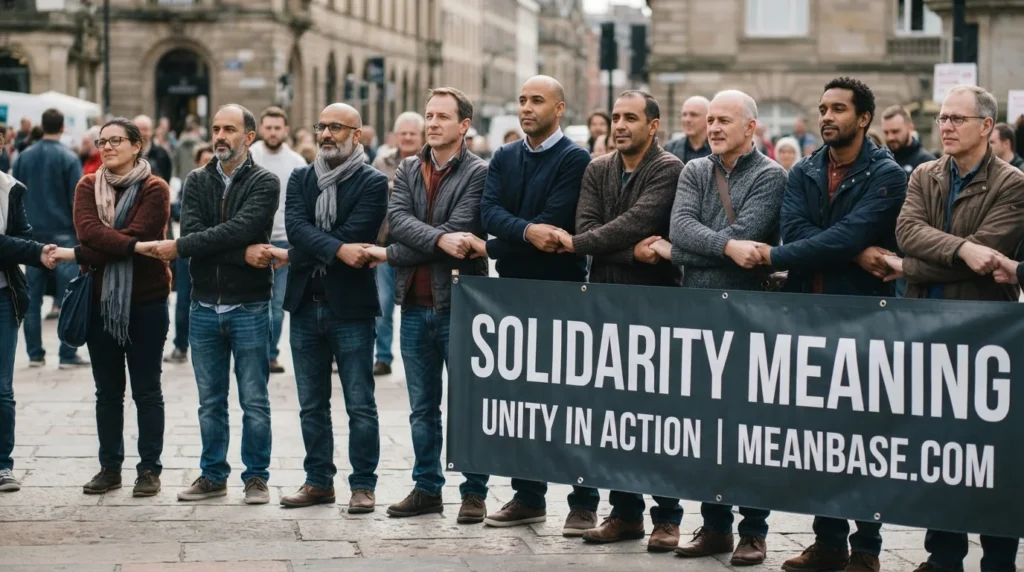
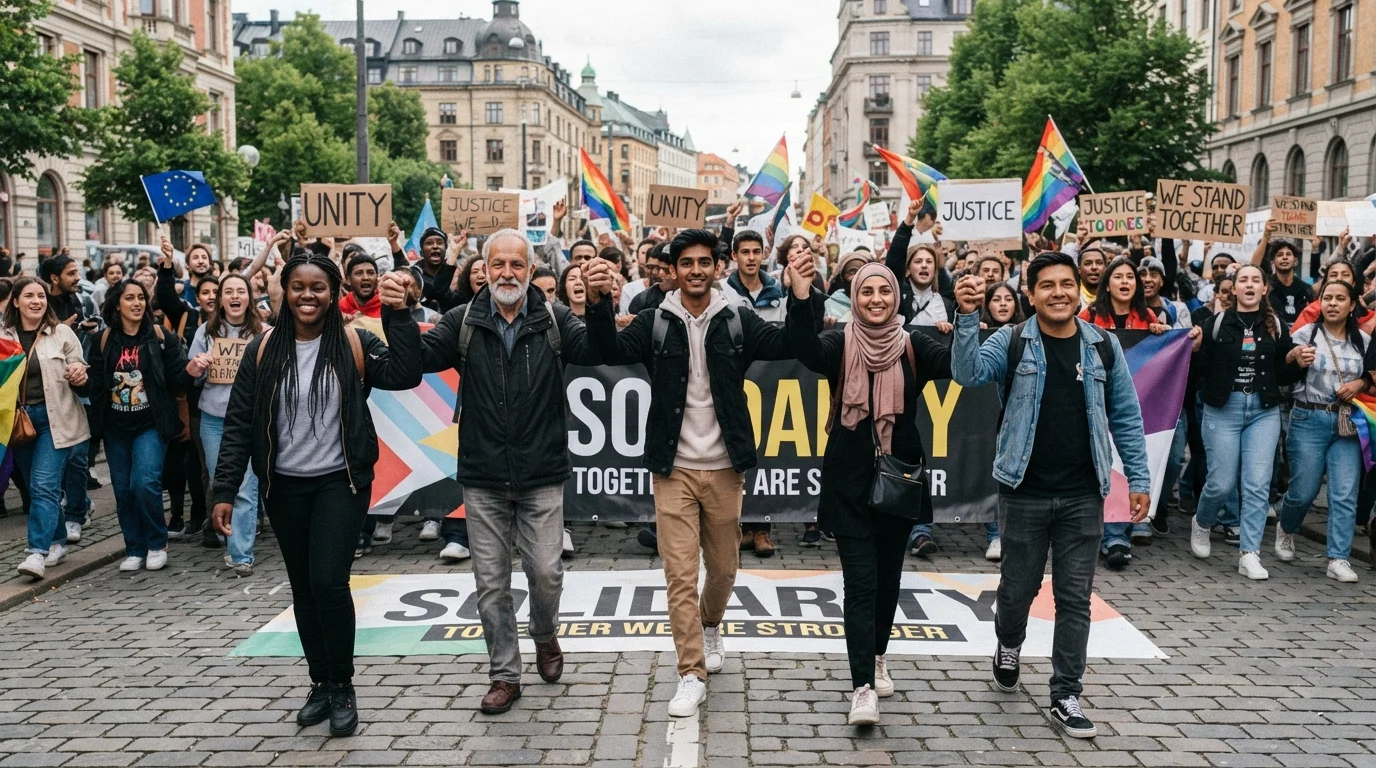
What Does “Solidarity” Mean in Simple Words?
The word solidarity means:
A feeling of unity, support, and agreement between people who share a common goal, struggle, or belief.
In simple terms:
Solidarity = standing together and supporting each other.
It is not just emotional support—it often includes action, commitment, and shared responsibility.
Core idea behind solidarity:
- “We are in this together”
- “I support your cause”
- “Your struggle is also important to me”
Solidarity Meaning in Different Contexts
The meaning of solidarity can slightly change depending on where it is used.
Social and emotional context
Solidarity means showing care and support for someone going through a difficult situation.
Example:
- Supporting a friend dealing with loss or hardship
Political and social movements
Solidarity is commonly used in activism and protests.
Example:
- People supporting workers’ rights or human rights movements
Workplace context
In offices or labor groups, solidarity means employees or members supporting each other’s rights and conditions.
Example:
- Workers standing together during strikes or negotiations
Online and social media use
On platforms like Instagram, TikTok, and X, people use “solidarity” to publicly show support.
Example:
- Posting “solidarity with the victims” during a crisis
How “Solidarity” Is Used in Real Conversations
Here’s how people naturally use the word in daily communication:
1. Personal support
“I stand in solidarity with you during this difficult time.”
Meaning: I fully support and empathize with your situation.
2. Social causes
“We are showing solidarity with the protest movement.”
Meaning: We support the cause and agree with its goals.
3. Group unity
“Our team acted in solidarity to defend our rights.”
Meaning: Everyone stood together as one group.
4. Online support
“Posting this in solidarity with those affected.”
Meaning: Publicly showing emotional and moral support.
Real-Life Examples of “Solidarity” in Text Messages
Example 1: Friend support
“I’m in solidarity with you, no matter what happens.”
Meaning: Strong emotional support and loyalty.
Example 2: Social issue
“People are showing solidarity with the flood victims.”
Meaning: Public support for disaster-affected people.
Example 3: Workplace
“The employees are acting in solidarity during the strike.”
Meaning: Workers are united in their action.
Example 4: Online post
“Solidarity with everyone fighting for equality.”
Meaning: Supporting a shared social cause.
Common Mistakes & Misunderstandings About Solidarity
1. Thinking it means just “help”
Solidarity is more than helping—it includes unity and shared belief.
Helping = individual action
Solidarity = collective support
2. Confusing it with sympathy
- Sympathy = feeling sorry for someone
- Solidarity = standing with someone and supporting them
Solidarity is stronger and more active.
3. Using it in casual situations incorrectly
Wrong:
- “I’m in solidarity with you for losing your keys”
Correct usage is for serious, meaningful, or group-related situations.
4. Thinking it always requires action
Sometimes solidarity is symbolic (like messages or posts), not always physical action.
Related Words and Similar Terms
If you understand solidarity meaning, these related terms will help you expand your vocabulary:
Unity
People coming together as one group.
Support
Helping or encouraging someone.
Empathy
Understanding someone’s feelings.
Alliance
A formal partnership or agreement.
Brotherhood / Sisterhood
Strong bond between people in a group.
Why “Solidarity” Matters in Modern 2026 Communication
In 2026, the word solidarity is more visible than ever due to:
- Social media activism
- Global awareness of human rights issues
- Workplace rights discussions
- Online communities supporting global causes
It has become a key word for expressing collective identity and moral support in the digital age.