
What Does “Peat” Mean?
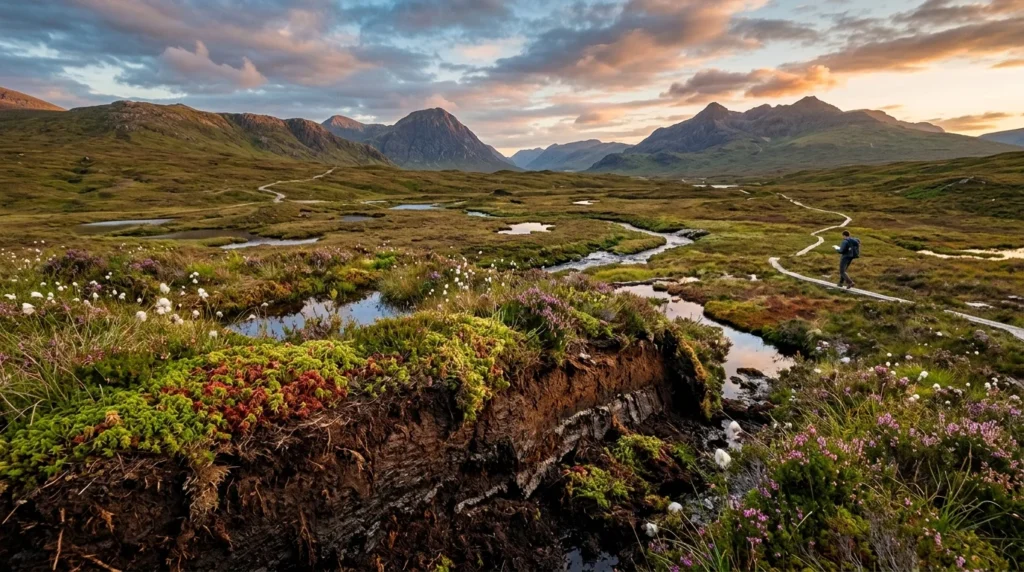
Peat is a type of organic material made up of partially decomposed plant matter that accumulates in waterlogged environments over long periods of time.
Simple Definition
Peat is partially decayed vegetation that forms in wetland environments where decomposition occurs very slowly.
Because waterlogged conditions limit oxygen, plants do not fully decompose. Over hundreds or thousands of years, layers of dead plant material build up and create peat.
Quick Answer
Peat is:
- Organic material
- Partially decomposed plants
- Found in wetlands
- Formed over long periods
- Used in gardening and fuel production
How Peat Forms
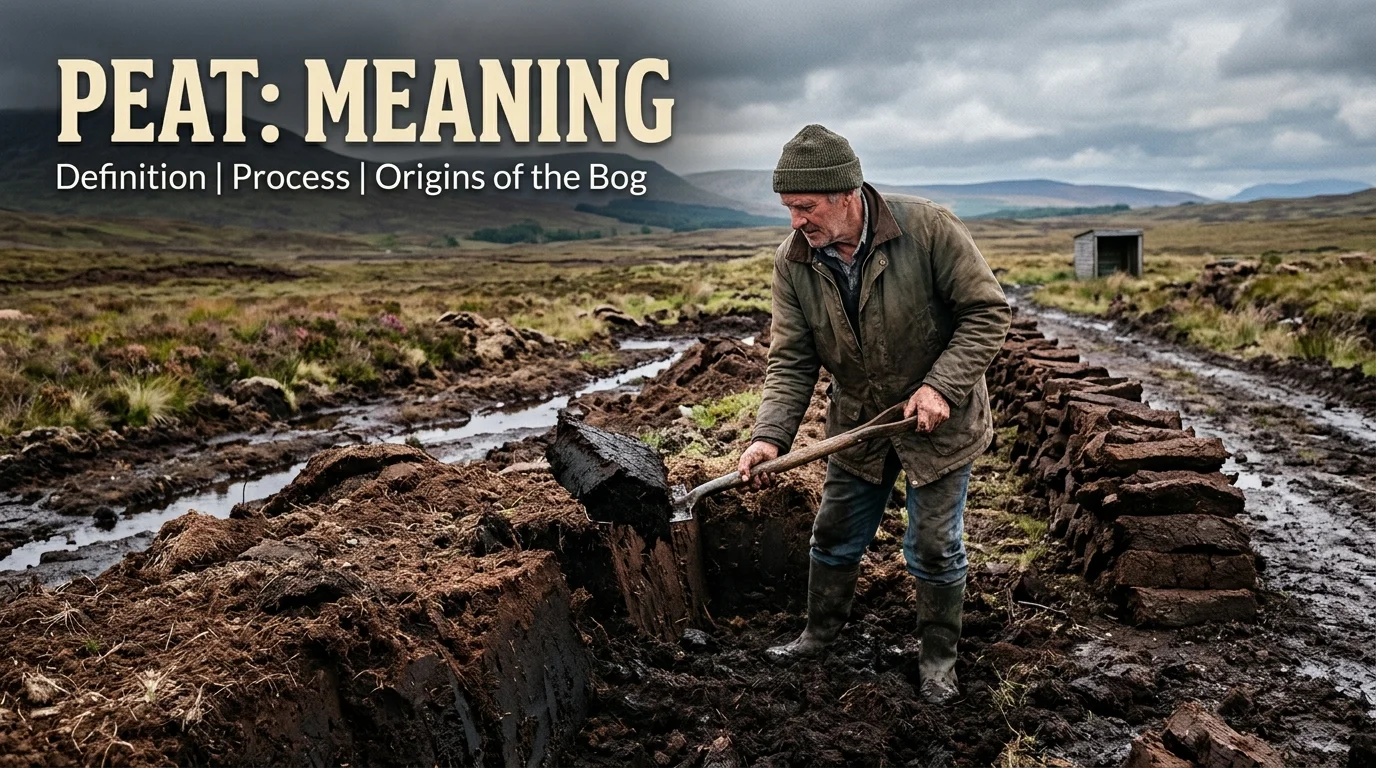
Peat formation is a slow natural process.
Step-by-Step Formation
- Plants grow in wet environments.
- Plants die and fall into waterlogged soil.
- Low oxygen levels slow decomposition.
- Organic material accumulates layer by layer.
- Thick peat deposits develop over centuries or millennia.
This process occurs much more slowly than normal decomposition on dry land.
Why Water Matters
Wet conditions are essential because they:
- Limit oxygen
- Slow microbial activity
- Preserve plant material
- Allow organic matter to accumulate
Without constant moisture, peat cannot form effectively.
Where Is Peat Found?
Peat develops in special wetland ecosystems called peatlands.
Common Peatland Types
Bogs
Bogs receive most of their water from rainfall and often contain thick peat layers.
Fens
Fens are wetlands fed by groundwater and surface water.
Marshes
Some marshes can accumulate peat under suitable conditions.
Swamps
Certain swamp ecosystems may also contain peat deposits.
Regions With Significant Peatlands
Large peatlands are found in:
- Northern Europe
- Canada
- Russia
- Scandinavia
- Indonesia
- Parts of the United Kingdom
- Northern United States
These areas contain some of the world’s largest carbon-rich ecosystems.
Peat Meaning in Gardening
One of the most common modern uses of peat is in gardening.
Peat Moss
Gardeners frequently use peat moss, which comes from decomposed mosses, especially sphagnum moss.
Why Gardeners Use Peat
Peat moss helps:
- Retain moisture
- Improve soil texture
- Enhance aeration
- Support plant growth
It is commonly added to potting mixes and garden soils.
Popular Gardening Applications
- Flower beds
- Container gardening
- Seed starting
- Houseplants
- Vegetable gardens
Because of environmental concerns, some gardeners now seek sustainable alternatives.
Peat as a Fuel Source
Historically, peat has been used as fuel in many regions.
How It Is Used
After harvesting and drying, peat can be burned to produce heat and energy.
For centuries, communities in parts of Europe relied on peat for:
- Home heating
- Cooking
- Industrial fuel
Why Peat Burns
Peat contains stored carbon from plant material, making it combustible when dried.
Although still used in some areas, many countries are reducing peat extraction due to environmental concerns.
Environmental Importance of Peat
Peatlands play a critical role in the Earth’s ecosystems.
Carbon Storage
One of the most important functions of peatlands is carbon storage.
Peat accumulates carbon from plants over thousands of years.
This helps:
- Reduce atmospheric carbon dioxide
- Slow climate change
- Maintain ecological balance
Biodiversity
Peatlands provide habitats for:
- Birds
- Insects
- Mammals
- Rare plants
- Amphibians
Many species depend on these ecosystems for survival.
Water Regulation
Peatlands help:
- Store water
- Reduce flooding
- Filter pollutants
- Support healthy watersheds
Because of these benefits, peatlands are increasingly protected worldwide.
How “Peat” Is Used in Real Conversations
Gardening Example
Person A: “Why does this soil stay moist so long?”
Person B: “It contains peat moss.”
Meaning:
The peat helps retain water.
Environmental Discussion
Student: “Why are peatlands important?”
Teacher: “They store enormous amounts of carbon.”
Meaning:
Peatlands help regulate the global climate.
Historical Example
Traveler: “How did people heat homes before modern fuels?”
Guide: “Many communities burned peat.”
Meaning:
Peat served as a traditional fuel source.
Common Mistakes & Misunderstandings
Mistake #1: Thinking Peat Is Soil
Peat is not soil itself.
Instead, it is organic material that can become part of soil mixtures.
Mistake #2: Assuming Peat Forms Quickly
Peat develops extremely slowly.
Many peat deposits take thousands of years to form.
Mistake #3: Believing All Wetlands Contain Peat
Not every wetland accumulates enough organic material to create peat deposits.
Specific environmental conditions are required.
Mistake #4: Confusing Peat With Compost
Although both contain organic matter, compost forms through active decomposition, while peat forms through very slow decomposition in waterlogged conditions.
Peat vs Peat Moss
These terms are often used interchangeably, but they are not identical.
Peat
Refers to the organic material found in peatlands.
Peat Moss
Refers specifically to peat harvested and processed for gardening and horticultural use.
In casual conversation, people may use the terms similarly, but they have slightly different meanings.
Related Terms and Similar Concepts
If you’re researching the peat meaning, you may also encounter these related terms.
Peat Moss
A gardening material derived from peat deposits.
Bog
A type of wetland where peat commonly forms.
Fen
A groundwater-fed wetland that may contain peat.
Wetland
An ecosystem characterized by saturated soils and abundant water.
Compost
Decomposed organic material used to improve soil.
Organic Matter
Plant and animal material that contributes to soil health.
Carbon Sink
A natural system that absorbs and stores carbon.
These concepts are closely connected to peat and peatland ecosystems.
Why Peat Matters Today
Peat remains important because it sits at the intersection of:
- Agriculture
- Gardening
- Climate science
- Ecology
- Conservation
As awareness of environmental issues grows, peatlands are receiving increased attention from scientists, policymakers, and conservation organizations.
Protecting peat ecosystems helps preserve biodiversity while maintaining one of the planet’s most effective natural carbon storage systems.