
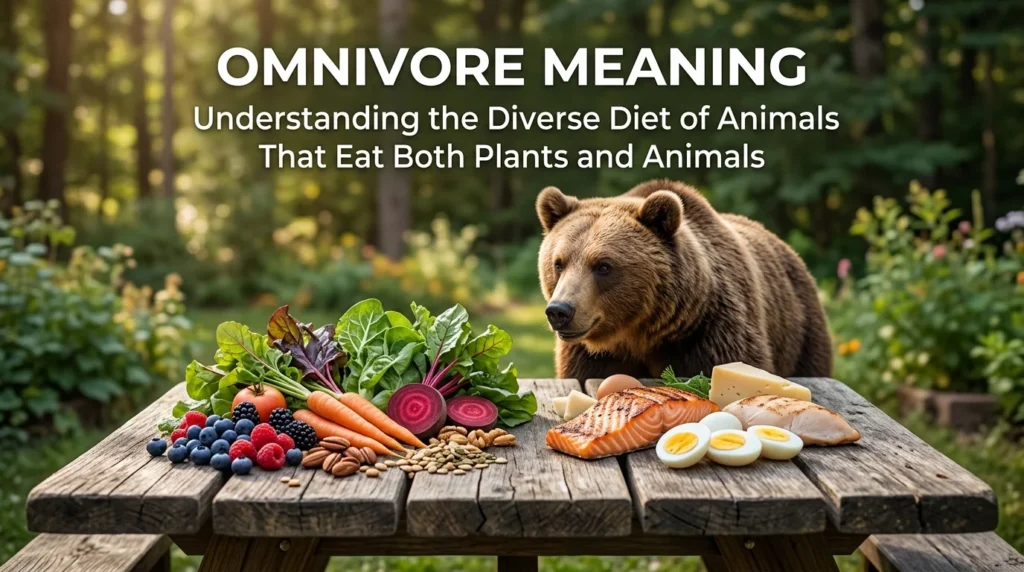
What Does “Omnivore” Mean in Text or Chat?
The word omnivore refers to a living organism that eats both plants and animals.
Simple Definition:
An omnivore is a person or animal that consumes both plant-based foods and animal-based foods.
Easy Explanation:
Omnivore = Eats everything (plants + meat).
So when someone asks, “what does omnivore mean in text or chat?”, they are usually referring to:
- A general diet type
- A biology concept
- Or sometimes a casual way to describe eating habits
Unlike slang words that change meaning depending on internet culture, omnivore meaning stays scientific and consistent.
What Does Omnivore Mean in Biology?
In biology, an omnivore is defined based on diet behavior and survival adaptation.
Scientific Definition:
An omnivore is an organism that is biologically adapted to consume both plant matter and animal flesh for nutrition.
This includes:
- Fruits and vegetables
- Seeds and grains
- Meat and fish
- Eggs
- Insects and small animals
Omnivores are highly adaptable because they are not limited to one food source.
Are Humans Omnivores?
Yes, humans are considered omnivores.
Humans naturally consume:
Plant-Based Foods
- Fruits
- Vegetables
- Nuts
- Grains
- Legumes
Animal-Based Foods
- Meat
- Fish
- Eggs
- Dairy products
Because human biology supports digestion of both categories, humans are classified as omnivores in scientific classification.
This flexibility is one reason humans have been able to survive in different environments across the world.
Examples of Omnivores in Nature
To fully understand omnivore meaning, it helps to look at real-world animals.
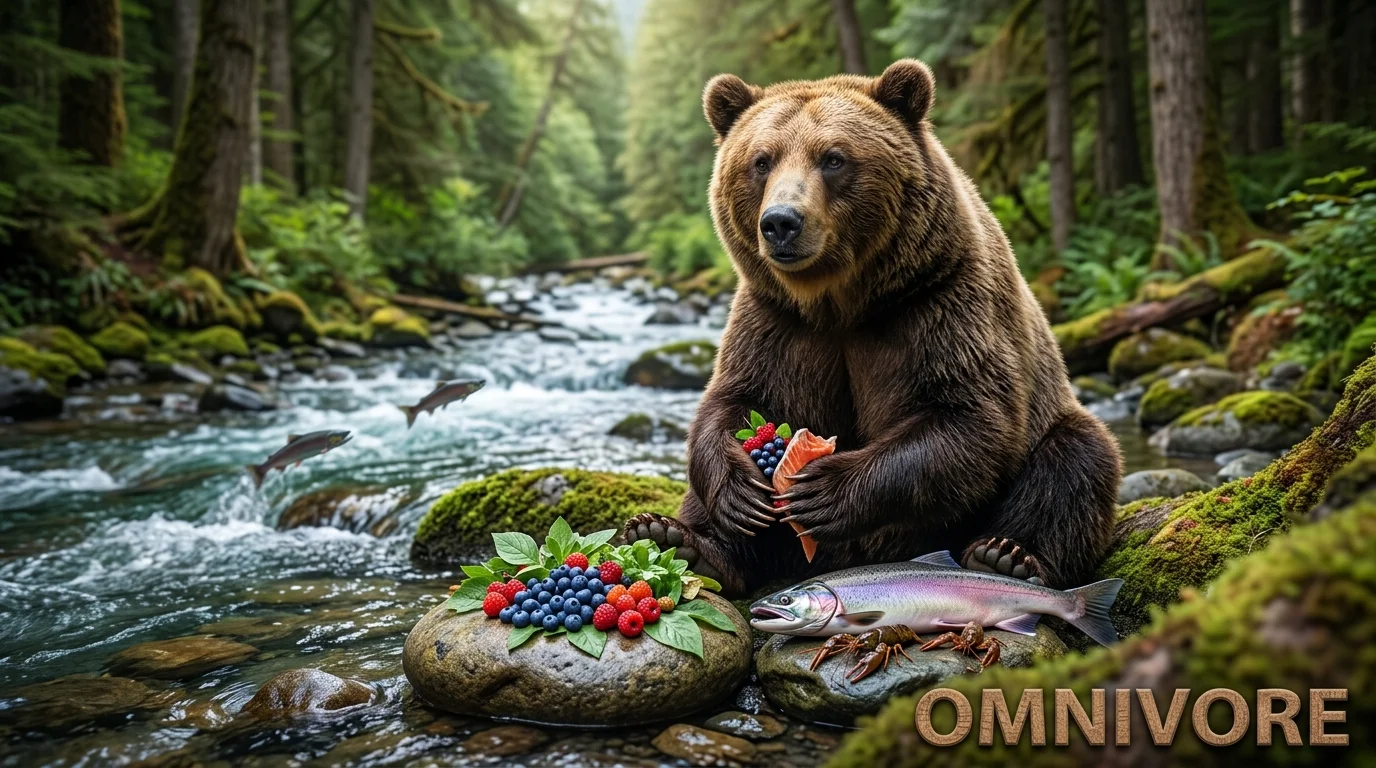
Brown Bear
Brown bears eat fish, berries, insects, and small animals. Their diet changes based on season and availability.
Pig
Pigs consume grains, vegetables, roots, and sometimes animal matter, making them classic omnivores.
Raccoon
Raccoons are highly flexible eaters, consuming fruits, insects, eggs, and small animals.
Humans
Humans are one of the most well-known omnivores due to their diverse diet.
Omnivore vs Herbivore vs Carnivore
Many people confuse these three biological categories. Understanding the difference is key to mastering omnivore meaning.
| Type | Eats Plants | Eats Animals |
|---|---|---|
| Omnivore | Yes | Yes |
| Herbivore | Yes | No |
| Carnivore | No | Yes |
Herbivores
Herbivores eat only plants.
Examples:
- Cow
- Rabbit
- Giraffe
Carnivores
Carnivores eat only animals.
Examples:
- Lion
- Tiger
- Wolf
Omnivores
Omnivores eat both plant and animal sources:
- Humans
- Bears
- Pigs
- Raccoons
- Chickens
How “Omnivore” Is Used in Real Conversations
Although omnivore meaning is mainly scientific, it appears in everyday conversations too.
1. Diet discussions
A: Are you vegetarian?
B: No, I’m an omnivore.
Meaning: The person eats both meat and plant foods.
2. School or biology class
Teacher: What is a bear classified as?
Student: It’s an omnivore.
Meaning: The animal eats both food types.
3. Health and nutrition talk
“I prefer an omnivore diet because I like balance.”
Meaning: The person eats both plant and animal foods.
4. Documentary narration
“The species is an omnivore that adapts its diet based on environment.”
Meaning: The animal eats whatever is available.
Characteristics of Omnivores
Understanding omnivore meaning becomes easier when you look at key traits.
1. Flexible diet
Omnivores can eat many different types of food.
2. Survival advantage
They can survive in changing environments.
3. Nutritional diversity
They get nutrients from multiple food sources.
4. Adaptability
Omnivores adjust their diet based on availability.
Why Humans Being Omnivores Matters
Humans being omnivores is important because it explains:
- Why we can live in different climates
- Why global diets vary widely
- Why we can survive on both plant and animal nutrition
- Why food culture is so diverse worldwide
This adaptability is one of the reasons humans became a dominant species.
Common Mistakes & Misunderstandings About Omnivore Meaning
Many people misunderstand the term omnivore meaning in biology and everyday use.
1. Thinking omnivores eat everything equally
Wrong idea: Omnivores eat equal amounts of plants and meat
Reality: Diet balance varies widely by species or person
2. Assuming omnivore means unhealthy eating
Wrong idea: Omnivore diet is unhealthy
Reality: It simply describes food variety, not health quality
3. Confusing omnivore with carnivore
Carnivores eat only animals. Omnivores eat both.
4. Thinking humans must eat meat to be omnivores
Not true. Being an omnivore means capability, not requirement.
5. Believing omnivore is a modern diet trend
Incorrect. It is a biological classification used in science for centuries.
Related Terms You Should Know
To fully understand omnivore meaning in science and everyday language, here are related terms:
Herbivore
An organism that eats only plants.
Carnivore
An organism that eats only animals.
Omnivorous diet
A diet that includes both plant and animal foods.
Diet flexibility
Ability to consume a wide range of foods.
Nutrition balance
A mix of nutrients from different food sources.
Why “Omnivore” Matters in 2026
Even in 2026, the term remains important in:
- Biology education
- Nutrition science
- Environmental studies
- Health discussions
- Wildlife documentaries
It also helps people understand how diet choices affect health and ecosystems.