

What Does “Font” Mean?
Simple Definition
A font is a specific style, size, and appearance of text characters used in printed or digital content.
In simple terms, a font determines how letters, numbers, and symbols look when displayed on a screen or printed on paper.
Featured Snippet Answer
What is a font?
A font is a set of text characters designed with a specific style, size, weight, and appearance. Fonts affect how written content looks and help improve readability, branding, and visual design.
Example
The following are examples of popular fonts:
- Arial
- Times New Roman
- Calibri
- Helvetica
- Verdana
- Georgia
Each font has its own unique appearance.
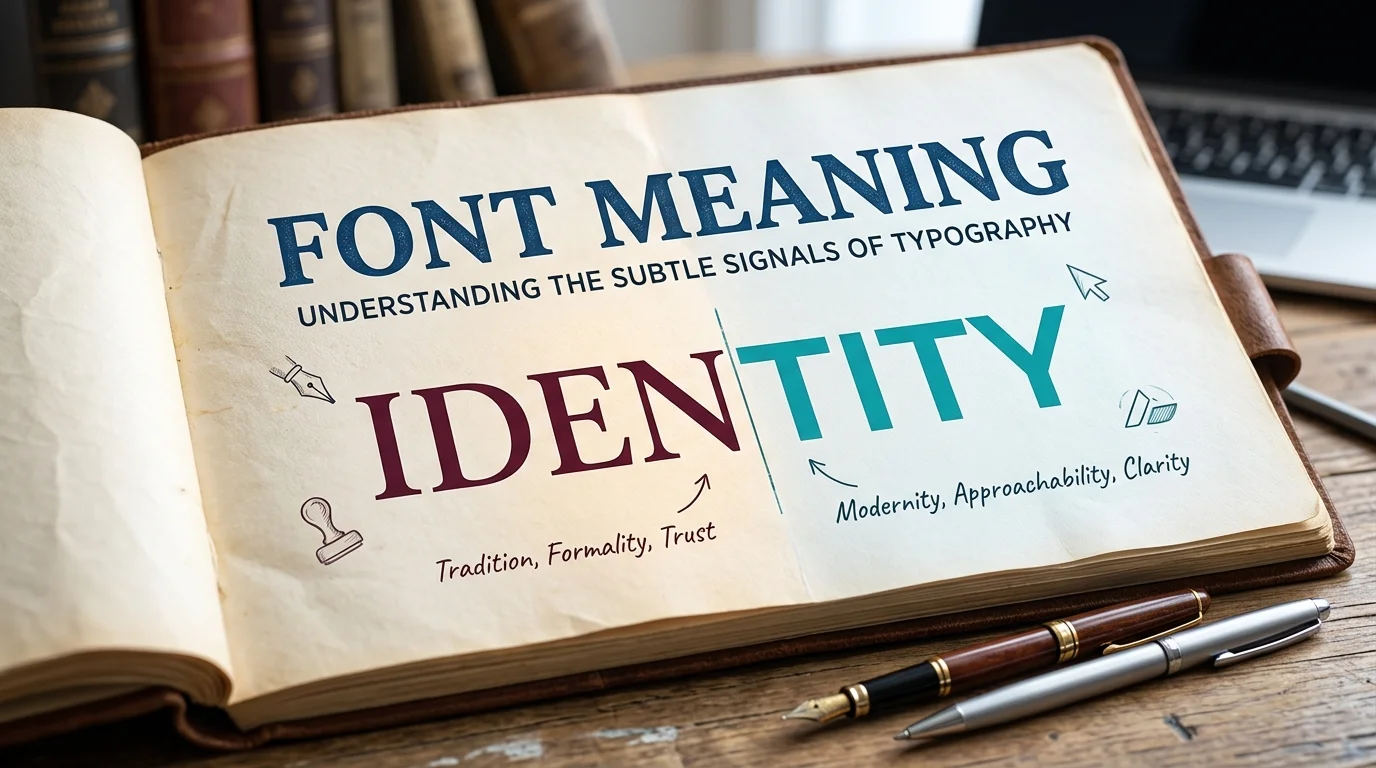
Font Meaning in Design
In graphic design and digital publishing, fonts play a crucial role in communication.
A font influences:
- Readability
- Visual appeal
- Brand identity
- User experience
- Professional appearance
For example:
- A law firm may use a formal font.
- A children’s brand may use a playful font.
- A luxury company may use an elegant font.
The choice of font can affect how people perceive a message.
What Is the Difference Between a Font and a Typeface?
Many people use these terms interchangeably, but they are technically different.
Typeface
A typeface refers to the overall design family.
Examples:
- Helvetica
- Arial
- Garamond
Font
A font refers to a specific version of a typeface.
Examples:
- Helvetica Bold 12pt
- Arial Italic 14pt
- Garamond Regular 10pt
In modern usage, however, most people simply use the word “font” for both concepts.
How Fonts Are Used in Real Life
Fonts appear almost everywhere.
Websites
Every website uses fonts for:
- Headlines
- Navigation menus
- Body text
- Buttons
Social Media
Content creators choose fonts to:
- Stand out
- Match branding
- Improve engagement
Books
Publishers carefully select fonts that are easy to read over long periods.
Business Documents
Companies use fonts to create:
- Reports
- Presentations
- Contracts
- Marketing materials
Mobile Apps
App designers choose fonts that remain readable on small screens.
Common Types of Fonts
Understanding font categories helps explain their different purposes.
Serif Fonts
Serif fonts have small decorative strokes at the ends of letters.
Examples:
- Times New Roman
- Georgia
- Garamond
Common uses:
- Books
- Newspapers
- Formal documents
Sans-Serif Fonts
Sans-serif fonts do not have decorative strokes.
Examples:
- Arial
- Helvetica
- Calibri
- Verdana
Common uses:
- Websites
- Apps
- Modern branding
Script Fonts
Script fonts resemble handwriting.
Examples:
- Calligraphy styles
- Signature fonts
Common uses:
- Invitations
- Logos
- Creative projects
Display Fonts
Display fonts are designed to attract attention.
Common uses:
- Posters
- Advertisements
- Headlines
Monospace Fonts
Each character occupies the same amount of space.
Examples:
- Courier New
- Consolas
Common uses:
- Programming
- Coding environments
- Technical documents
Why Fonts Matter
Many people underestimate the impact of fonts.
Readability
A good font makes text easier to read.
Branding
Brands often become recognizable through typography.
For example, major companies carefully choose fonts that reflect their identity.
User Experience
Poor font choices can make content difficult to understand.
Professionalism
The right font helps create a polished and trustworthy appearance.
Font Meaning in Technology
In technology, a font is a digital file that contains character designs.
Modern font formats include:
- TTF (TrueType Font)
- OTF (OpenType Font)
- WOFF (Web Open Font Format)
These files allow computers and devices to display text consistently.
Font Meaning on Social Media
Many users search for special fonts to make their profiles stand out.
Common uses include:
- Instagram bios
- TikTok captions
- YouTube thumbnails
- X posts
- Facebook profiles
People often refer to decorative text styles as “fonts,” even when they are technically Unicode character variations.
Real Examples of Font Usage
Example 1: Business
A company chooses a clean sans-serif font for its website to improve readability.
Example 2: Wedding Invitation
A designer uses a script font to create an elegant appearance.
Example 3: School Assignment
A student uses Times New Roman because it is widely accepted in academic settings.
Example 4: Social Media
A creator uses a bold display font in a thumbnail to attract attention.
Example 5: Coding
A programmer uses a monospace font because aligned characters improve readability.
Common Mistakes & Misunderstandings
Mistake #1: Thinking All Fonts Look the Same
Different fonts can dramatically change how content is perceived.
Mistake #2: Using Too Many Fonts
Designers generally recommend limiting font choices to maintain consistency.
Mistake #3: Prioritizing Style Over Readability
A visually attractive font may be difficult to read.
Mistake #4: Confusing Fonts with Colors or Effects
Fonts determine character design, while colors and effects are separate design elements.
Mistake #5: Ignoring Mobile Devices
A font that looks great on a desktop may appear difficult to read on smartphones.
Related Terms and Similar Concepts
If you’re researching font meaning, you may also encounter these related terms.
Typography
The art and technique of arranging text.
Typeface
The overall design family of characters.
Kerning
The spacing between individual letters.
Leading
The vertical spacing between lines of text.
Glyph
A specific visual representation of a character.
Calligraphy
Decorative hand lettering.
Text Formatting
Adjustments such as size, bolding, italics, and alignment.
Why Are Fonts Important for SEO?
Fonts indirectly affect search engine optimization because they influence:
- User experience
- Readability
- Accessibility
- Time spent on page
When visitors can easily read content, they are more likely to stay engaged.