

What Does “Demographics” Mean in Text or Chat?
The word demographics refers to statistical information about groups of people.
Simple Definition:
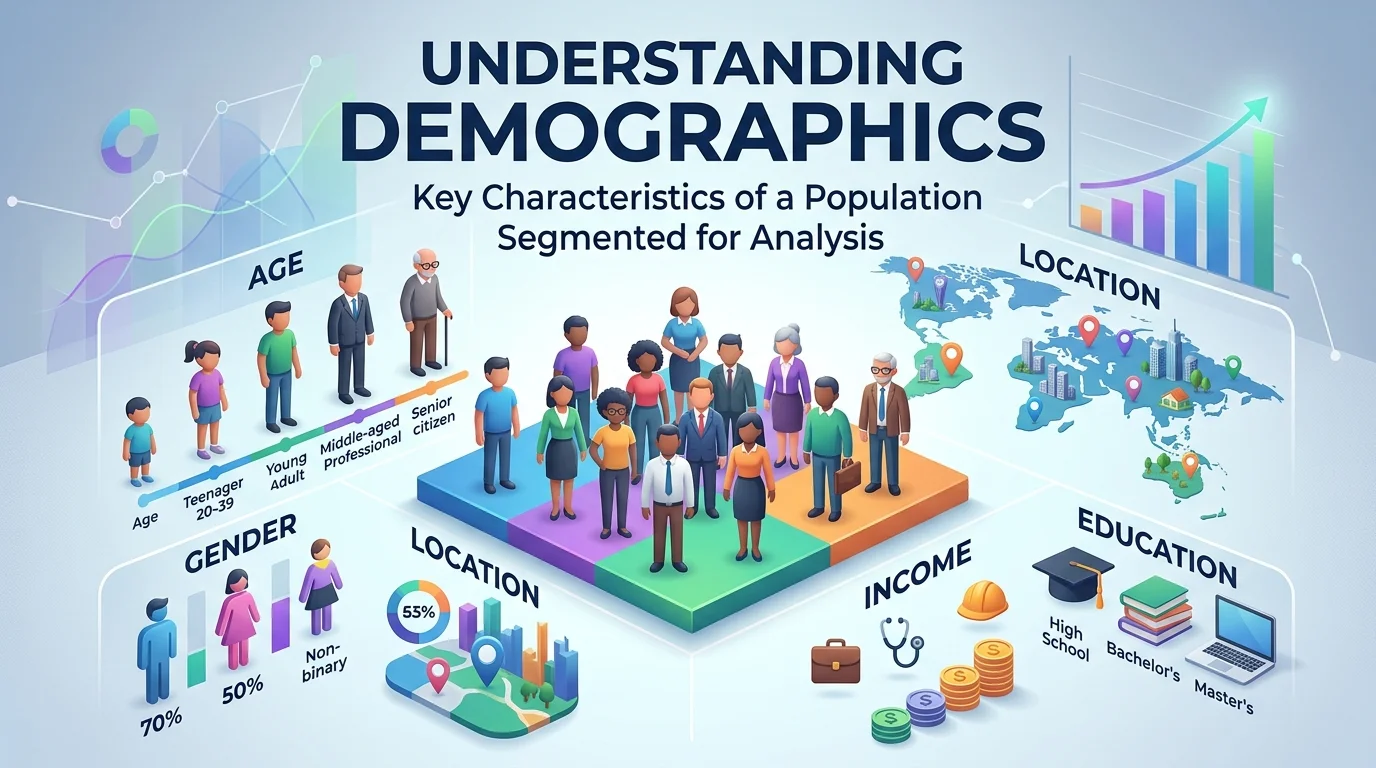
Demographics means data that describes a population based on characteristics like age, gender, location, income, education, and interests.
Easy way to understand it:
Demographics = “information about groups of people.”
So when someone says “demographics,” they are talking about who people are as a group, not individual persons.
What Information Is Included in Demographics?
Demographics usually include different categories that help describe populations clearly.
Common demographic factors:
- Age (teenagers, adults, seniors)
- Gender
- Location (country, city, region)
- Income level
- Education level
- Job or occupation
- Marital status
- Language
- Ethnicity (in research contexts)
These details help organizations understand who their audience is.
How “Demographics” Is Used in Real Conversations
The demographics meaning in real life and online chats is mostly used in business, marketing, social media, and research.
Where you’ll see it:
- Marketing reports
- Social media analytics (Instagram, TikTok, YouTube)
- Business planning
- Political surveys
- App user data analysis
- Academic research
When people use it:
- To understand audiences
- To target ads
- To study user behavior
- To analyze trends
Real Text & Work Examples of “Demographics”
Here are simple real-life examples showing how demographics meaning in chat and professional use appears:
Example 1: Marketing conversation
A: Who is our main audience?
B: Mostly young demographics aged 18–24.
Meaning: The target group is young people.
Example 2: Social media analytics
“Our Instagram demographics show 60% female users.”
Meaning: The majority of users are female.
Example 3: Business planning
“We need to expand into older demographics.”
Meaning: Targeting older age groups.
Example 4: Simple explanation
A: What does demographics mean?
B: It’s just information about groups of people.
Why “Demographics” Is Important
Understanding demographics meaning in marketing and data analysis is very important in today’s digital world.
1. Helps businesses target the right audience
Companies use demographics to show ads to the right people.
2. Improves social media content
Creators study demographics to know:
- who watches their content
- what age group engages most
- what content performs best
3. Guides political and social decisions
Governments use demographics for:
- population planning
- education policies
- healthcare systems
4. Helps product development
Brands design products based on:
- age group needs
- income levels
- lifestyle habits
Common Mistakes & Misunderstandings About “Demographics”
Many people misunderstand the demographics meaning in data and everyday usage.
1. Thinking it means one person
Wrong: “Demographics means a single person”
Reality: It always refers to groups of people.
2. Confusing it with “psychographics”
- Demographics = who people are (age, gender, etc.)
- Psychographics = why people behave (interests, lifestyle, beliefs)
3. Thinking it only applies to marketing
Reality: It is used in:
- healthcare
- education
- politics
- social research
4. Assuming it is complicated
Reality: It simply means “group information about people.”
Related Slang & Similar Terms
To fully understand demographics meaning in modern usage, here are related terms:
1. Target audience
The specific group a product or message is aimed at.
2. User base
All people using a product or platform.
3. Analytics
Data analysis of user behavior and trends.
4. Population data
General statistical information about people.
5. Psychographics
Information about interests, values, and lifestyle.
Where You See “Demographics” in 2026
In today’s digital world, the word demographics is extremely common in:
- TikTok analytics dashboards
- YouTube Studio insights
- Instagram business accounts
- E-commerce platforms
- AI-driven marketing tools
- Mobile app reports
It helps brands understand who is engaging with their content in real time.