

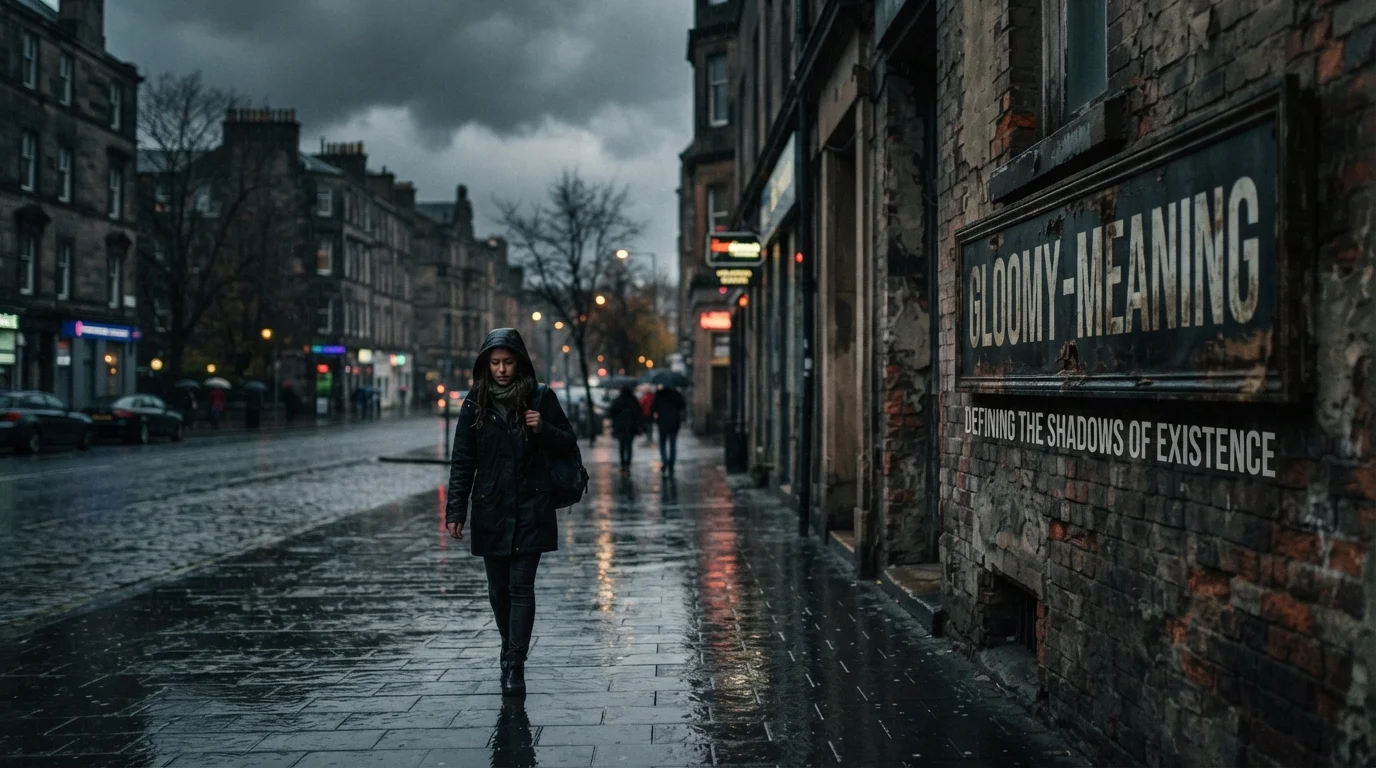
What Does “Gloomy” Mean?
The word gloomy describes something that feels dark, depressing, sad, or lacking brightness and cheerfulness.
Simple Definition
Gloomy means dark, sad, depressing, or filled with a feeling of unhappiness or lack of hope.
The word can describe:
- A person’s mood
- The weather
- A place or environment
- Thoughts about the future
- An overall atmosphere
Gloomy Meaning in English
In everyday English, gloomy often refers to a situation that feels emotionally heavy or physically dark.
Examples:
- A gloomy day with gray clouds.
- A gloomy person who seems sad.
- A gloomy prediction about the economy.
- A gloomy room with little sunlight.
Pronunciation
Gloomy is pronounced as:
GLOO-mee
The first syllable rhymes with “room.”
Origin of the Word
The word comes from the older English term gloom, which means darkness, shadow, sadness, or a lack of light. Over time, gloomy evolved into an adjective used to describe things associated with darkness or sadness.
How “Gloomy” Is Used in Real Conversations
Gloomy is a versatile adjective used in many different situations.
Talking About Weather
One of the most common uses of gloomy relates to weather.
Examples:
- “It’s so gloomy outside today.”
- “The sky has been gloomy all morning.”
- “We canceled the picnic because of the gloomy weather.”
In this context, gloomy means cloudy, dark, and lacking sunshine.
Describing Emotions
People often use gloomy to talk about feelings.
Examples:
- “She seemed gloomy after hearing the news.”
- “I’ve been feeling gloomy lately.”
- “He looked gloomy during the meeting.”
Here, gloomy means sad, discouraged, or emotionally down.
Describing Places
A location can feel gloomy if it appears dark, dull, or uninviting.
Examples:
- “The old building looked gloomy.”
- “The hallway felt gloomy without windows.”
- “The castle had a gloomy atmosphere.”
Discussing Future Expectations
Gloomy is often used when talking about negative predictions.
Examples:
- “Experts issued a gloomy forecast.”
- “The company released a gloomy financial report.”
- “His outlook on the future is gloomy.”
In these examples, gloomy means pessimistic or lacking optimism.
Social Media Usage
On platforms like Instagram, TikTok, X, and Facebook, people often use gloomy to describe:
- Their mood
- Rainy weather
- Emotional songs
- Aesthetic photography
- Dark-themed content
Example:
“Perfect gloomy weather for staying in and watching movies.”
Real Examples of “Gloomy” in Sentences
Here are examples showing how the word works in different contexts.
Example 1: Weather
“The gloomy clouds covered the entire city.”
Meaning: The sky was dark and cloudy.
Example 2: Mood
“After failing the exam, he felt gloomy for several days.”
Meaning: He felt sad and disappointed.
Example 3: Atmosphere
“The abandoned house had a gloomy appearance.”
Meaning: The house looked dark and depressing.
Example 4: News Report
“The report offered a gloomy outlook for the economy.”
Meaning: The report predicted difficult conditions ahead.
Example 5: Personal Feelings
“She became gloomy when her travel plans were canceled.”
Meaning: She felt unhappy and discouraged.
Example 6: Literature
“The gloomy forest stretched endlessly into the distance.”
Meaning: The forest appeared dark and mysterious.
Different Contexts Where Gloomy Is Used
Gloomy Weather
This is perhaps the most common use.
Characteristics include:
- Gray skies
- Rain clouds
- Fog
- Lack of sunlight
Example:
“It’s a gloomy afternoon.”
Gloomy Mood
People may describe themselves as gloomy when they feel:
- Sad
- Disappointed
- Discouraged
- Unmotivated
Example:
“I’m feeling a bit gloomy today.”
Gloomy Atmosphere
Places can feel gloomy when they are:
- Dark
- Empty
- Cold
- Unwelcoming
Example:
“The hotel lobby seemed gloomy.”
Gloomy Predictions
A gloomy prediction suggests a negative outcome.
Example:
“The analysts presented a gloomy forecast.”
Common Mistakes & Misunderstandings
Thinking Gloomy Means Angry
Gloomy and angry are different emotions.
- Angry = upset or mad
- Gloomy = sad or depressed
Incorrect:
“He was gloomy because someone cut him off in traffic.”
Better:
“He was angry.”
Assuming Gloomy Always Means Depressed
Gloomy does not necessarily indicate clinical depression.
Often, it simply means:
- Feeling down
- Looking sad
- Experiencing temporary disappointment
Confusing Gloomy With Dark
While gloomy can refer to darkness, it often includes an emotional element.
Example:
- A dark room may simply lack light.
- A gloomy room feels depressing or uninviting.
Using Gloomy for Positive Situations
Gloomy almost always has a negative tone.
Incorrect:
“The party had a gloomy atmosphere.”
Unless the party was unpleasant, this would sound unusual.
Synonyms of Gloomy
If you’re looking for words similar to gloomy, consider these alternatives.
Sad
Feeling unhappy or sorrowful.
Depressed
Experiencing deep sadness.
Melancholy
A thoughtful, quiet sadness.
Dreary
Dull and lacking excitement.
Miserable
Extremely unhappy.
Somber
Serious and dark in mood.
Downcast
Feeling discouraged or disappointed.
Pessimistic
Expecting negative outcomes.
Bleak
Without hope or encouragement.
Dismal
Depressing and disappointing.
Antonyms of Gloomy
These words have opposite meanings.
- Cheerful
- Happy
- Bright
- Joyful
- Optimistic
- Hopeful
- Sunny
- Positive
- Encouraging
- Uplifting
Example:
“The gloomy weather eventually turned bright and sunny.”
Related Words and Expressions
If you’re researching gloomy meaning, you may also encounter related terms.
Melancholy
A gentle, reflective sadness.
Somber
Dark, serious, or solemn.
Dreary
Boring, dull, and depressing.
Moody
Experiencing changing emotions.
Blue
An informal way of saying sad.
Downhearted
Feeling discouraged.
Pessimistic
Expecting unfavorable outcomes.
These terms are often used in similar situations but may carry slightly different emotional tones.
Why Understanding “Gloomy” Matters
The word gloomy appears frequently in:
- Literature
- News articles
- Social media posts
- Daily conversations
- Movies and television
- Academic writing
Understanding its meaning helps improve:
- Reading comprehension
- Writing skills
- English vocabulary
- Everyday communication
Because gloomy can describe emotions, places, weather, and predictions, it is a useful word to know.
Gloomy Meaning: Quick Summary
If you need a quick answer:
Gloomy means dark, sad, depressing, or lacking brightness and hope. It can describe weather, emotions, places, atmospheres, or negative expectations about the future.